“As you know in fashion, one day you’re in. And the next day, you’re out.”
If you have watched “Project Runway” then you’ve seen a small elite group of fashionistas evaluating who’s in and who’s out based on which design and designer aligns with their values. A runway is used to showcase contestant’s designs, designs created within a strict set of rules and with a limited budget and time. When I recently reviewed environmental, social, and governance (ESG) scoring, the above saying and Lifetime’s design competition came to mind – as Project ESG.
Project ESG contestants are scored by select groups as to whether their organization operates within a strict set of guidelines that align with their values. Project ESG also has runways: main street and financial statements.
“Project Runway” contestants are scored based on their creative flair, good structuring, demonstrating diversity in design skills, and the sustainability of their designs -conforming to, attuned to, or characterized by the latest trends in fashion.
How Project ESG Contestants are Scored
“Environmental, social, and governance, or ESG, is a type of financial investing where factors beyond financial considerations are considered. Companies are scored by fund managers based on varying, and undefined factors.
The environmental perspective includes anything that contributes to carbon emissions and climate change, such as energy, water, and waste management, ventilation/air quality, materials sourcing and management, and supply chain management.
The social perspective addresses the relationships and reputation a company has with its stakeholders, such as employee engagement, diversity and inclusion, health and safety, human rights and community relations, and labor practices.
The governance perspective is the internal system of practices, controls, and procedures that a company uses to govern/manage itself, such as business model resilience, risk management, legal and regulatory compliance, due diligence, and meeting external stakeholders’ needs.”
Sustainability, ESG And ISO Are Key To A Competitive Strategy | CGBC (cgbusinessconsulting.com)
“A credit score communicates a consumer’s ability to pay back debt. A bond rating provides context for an issuer’s ability to meet financial commitments and avoid default. Similarly, an ESG risk score gauges a company’s performance on ESG issues and exposure to ESG-related risks. They are calculated against a set of ESG metrics and may be expressed on a number scale or through a letter ranking system. . . (Emphasis mine.)
ESG contestants are scored on ESG issues which span everything from cybersecurity to climate change to diversity, equity, and inclusion . . .
Organizations with a good ESG score are thought to be better equipped to anticipate future risks and opportunities, more inclined to longer-term strategic thinking and to prioritize long-term value creation over short-term gains. As such, the consequences of a substandard score can be momentous.”
–ESG Scores and Ratings: What They Are, Why They Matter
(Prioritizing long-term “value creation”? Whose values are being prioritized?)
Project ESG Scorekeepers
An industry of ESG “raters” has sprung up to rate companies’ Project ESG bona fides.
“Producers of ESG scores are varied, just as the types of ESG scores are. Nevertheless, we can categorize them based on the nature of their organization:
-NGOs. Carbon Disclosure Project is an example of an NGO that produces ESG scores.
-Financial services firms. Bloomberg, MSCI, FTSE Russell and S&P Global are examples of financial services firms that publish ESG scores.
Companies have also started producing ESG scorecards for themselves.”
The attribution of the above quote and a brief overview of the Types of ESG scores, scoring methodology, producers of ESG scores, and the users of ESG scores are at the following link:
ESG Investing 101: What Is an ESG Score? | Investing | U.S. News (usnews.com)
Every rating agency, irrespective of whether they are issue-specific, category-specific or general, uses a similar methodology.
Walking Project ESG’s Runways (or walking the plank) – three examples
Dylan Mulvaney walked Project ESG’s runway in a Bud Lite design.

Was Bud Light’s Dylan Mulvaney Decision About ESG? (forbes.com)
The boycott against Bud Light is hammering sales. Experts explain why. – ABC News (go.com)
ABINBEV_ESG_2021_Final.pdf (amazonaws.com)
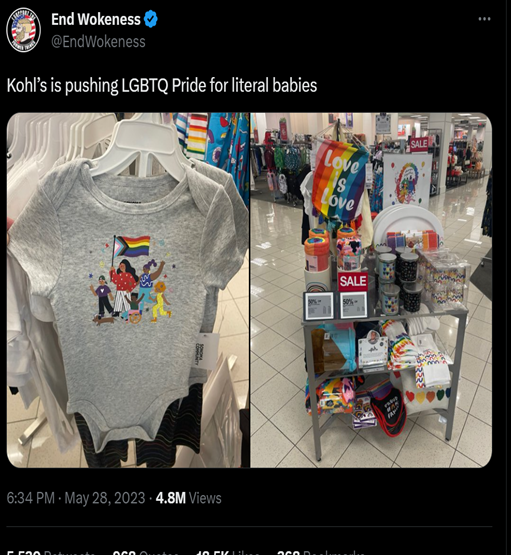
Kohl’s decided that infants and children should model on Project ESG’s runway in LGBTQ+ garb.
“The plummeting sales for Anheuser-Busch and the roughly $10 billion hit to Target’s market cap in over a week weren’t enough to dissuade Kohl’s from fulfilling its environmental, social and governance (ESG) score goals.”
LGBTQIA+ Pride Clothing: Show Love Is Love Every Day | Kohl’s (kohls.com)
Kohl’s Releases 2022 ESG Report (kohls.com)
Kohl’s ESG Report Shows Focus On LGBTQ+ Pride Support (forbes.com)
Target decided that “tuck friendly swimsuits” should be modeled on the Project ESG runway.
Target loses $10B following boycott calls over LGBTQ-friendly clothing (nypost.com)
Reporting & Progress | Target Sustainability & ESG

Pride month, war on “woke” weighs on Corporate America’s stocks (axios.com)
As mentioned above, Project ESG scoring occurs when the contestant’s designs walk the runway. Showcasing LGBTQ+ deisgns on the main street runway is one in-your-face way to improve a Project ESG score. The bulk of Project ESG’s points, located on financial statements, are noticed by accountants and the suppliers of capital, loans and credit lines, i.e., Big Banks.
If you offer your company’s stock publicly you are impacted by accounting standards. The SEC directs that your financial statements reflect ESG disclosures to investors and the capital markets, including climate-related disclosures of climate risks among other risks.
Propelled by the planetary emergency and the drive for transparency, global sustainability reporting standards and ESG disclosure regulations are coming. Boards and C-suites should prepare now, and could find new opportunities to create value.
Tectonic shifts: How ESG is changing business, moving markets, and driving regulation
PwC’s accounting podcast RSS Feed (buzzsprout.com)
Why Not Project ESG?
Why oppose Project ESG when environmentalism, climate change, and social justice are some of the criteria on which a judgment can be made on a corporation contestant?
Why oppose Project ESG when it’s said to foster in its contestants an increasing focus on corporate purpose, accountability and operational resilience and strengthens environmental, social and governance?
Why oppose Project ESG when it’s not a competition platform but rather a platform where contestants are eliminated based on “progressive” challenges posed to them?
There’s more to Project ESG than meets the eye.
Here’s what Heartland Institute Research Fellow Jack McPherrin and others at Heartland have to say:
“At its core, ESG is a social credit scoring system that ideologically aligned elites and subservient bureaucratic authorities have developed to “reset” the global financial system to their advantage, fundamentally transforming society in the process. This is accomplished by altering traditional frameworks of evaluating businesses and assessing investment risk.
“Rather than determining the creditworthiness and value of a business or industry based upon objective measures such as profit, return on investment, consumer demand, and other material performance measures, ESG’s architects seek to judge entities based upon subjective and difficult to quantify social and environmental goals. These objectives typically have little or nothing to do with business success in the marketplace based on consumer demand expressed through their purchases.” (Emphasis mine.)
And, with regard to his well-researched paper documenting ESG’s becoming “one of the gravest threats facing the free societies of the world today.”, Jack McPherrin writes
“ESG is an insidious threat to individual freedom and economic progress, as this important paper explains. ESG efforts threaten everyone’s retirement, their ability to obtain and maintain credit, and even to have bank accounts and do business with banks. A cabal of political and financial elites are using social credit scoring in the form of ESG to enforce docile acceptance of the progressive social and economic goals they favor.” (Emphasis mine.)
One major aspect of Project ESG program that has driven many away is the matter of return on investment (ROI). Investors want a positive return from their shareholdings and not losses, e.g. KSS, TGT, BUD, produced by highly subjective elements that Project ESG scoring dictates. Investors have placed their capital into a corporation to grow their investment and not for drama and virtue signaling.
If a corporation’s CEO, CFO, COO, CIO or another suit wants to donate a portion of their huge salary to some social cause they are free to do so. They are not free to do so with my shares. They should not buy carbon offsets with my investment dollars. When I sell my shares, I will use the profit to support my social values.
I’ve told the portfolio manager overseeing my retirement funds that I do not want any of my funds invested in ESG companies. “Don’t ESG on me,” I said. She responded by saying that many of her clients have said the same thing.
The same objection to Project ESG applies for public and pension funds. Find out where your state is with ESG. Your state can impose an ESG Insurance Shareholder Restriction:
A bill to prohibit insurers or holding companies organized under state law from including ESG proposals in a proxy statement or implementing an ESG shareholder proposal.
Other aspects of Project ESG, beyond financial considerations, are being rejected:
“Nearly every ESG system includes three primary themes: climate change mitigation and associated climate and environmental goals and actions; promoting social justice and diversity, equity, and inclusion (DEI) initiatives; and reforming corporate governance. A common fact of the many different ESG systems currently in use is that each of them contains highly subjective elements.” Jack McPherrin (See 2023-ESG-ReportvWeb-2.pdf (heartland.org) page 15 for the social metrics.)
Project ESG elites talk of stakeholders (designers) finding new opportunities to create value. The values to be created are Project ESG elite values. But I do not share those values.
I reject the notion that there is a climate change crisis. See previous posts for more.
I reject the trendy “value” of Diversity, Equity and Inclusion (DEI) over the classic value of merit. I value honesty, trustworthiness, compassion, decency, respect for life, good environmental stewardship, taking responsibility for one’s behavior. Fulfilling quotas on company boards doesn’t add value to the company, the consumer or the stockholder. Fulfilling quotas only adds Project ESG points. (Note: Kamala Harris was a DEI pick for U.S. VP. Do you see any value in the pick?)
I reject Project ESG’s corporatist government design as the means to bring about the common good. Free market capitalism with individuals freely making tradeoffs works toward a common good.

I reject Project ESG’s social engineering by elite design checklists.
I reject Project ESG’s design authority – globalist dominionism that assumes positions of power and influence over all aspects of society and government that will produce a global serfdom heavily reliant on Big Brother’s social credit scoring.
I reject the basis of Project ESG’s evaluations: scientism and scientific socialism. I remind you that scientism is “the opinion that science and the scientific method are the best or only way to render truth about the world and reality”. Scientific socialism is Marxian socialism made more rigid and deterministic by Friedrich Engels. I reject social engineering and the mechanistic determinism that eliminates human contingency.
I thereby reject the notion that only physical matter and its motions are real and that everything—nature, history, even human thought—is reducible to matter moving in accordance with the same timeless “iron laws” of motion.
I reject utopian socialism.

I reject Project ESG’s dictatorial control of life’s designs. I reject severe economic and social regimentation, and forcible suppression of opposition. Life is more than a checklist, more than a deterministic program designed to produce certain outcomes. I reject fascism.

Why do we need Project ESG? For the drama of who’s in and who’s out? To market the ideology of having wealth, power, and influence become increasingly concentrated in the hands of a select few oligarchic individuals and institutions promoting ESG and their new economic ideology of “stakeholder capitalism”?
What’s the rush to change the world? Why is there a hue and cry and John Kerry’s nasally nostrums about “fixing the climate” now? Because a few people say we need to “act now!” and their demands are constantly repeated on state media? There is no climate crisis but there certainly is a concerted effort being made by elites to change the social climate via a Great Reset. (See previous posts for more.)
Why a Black Mirror approach of unending pursuit of scientific and technological advancement?
Why do we need to change what is working? And there is much that is working. Capitalism works. Nuclear energy works. Traditional marriage and the nuclear family works. We notice the loss when what works is sidelined and corrupted by social planners who tell us there’s a better way.
And, what about Chesterton’s fence, the principle that you don’t destroy what you don’t understand. Reforms should not be made until the reasoning behind the existing state of affairs is understood. (See below for more.) One should not be rewiring society without a knowledge of history and of what circuitry works.
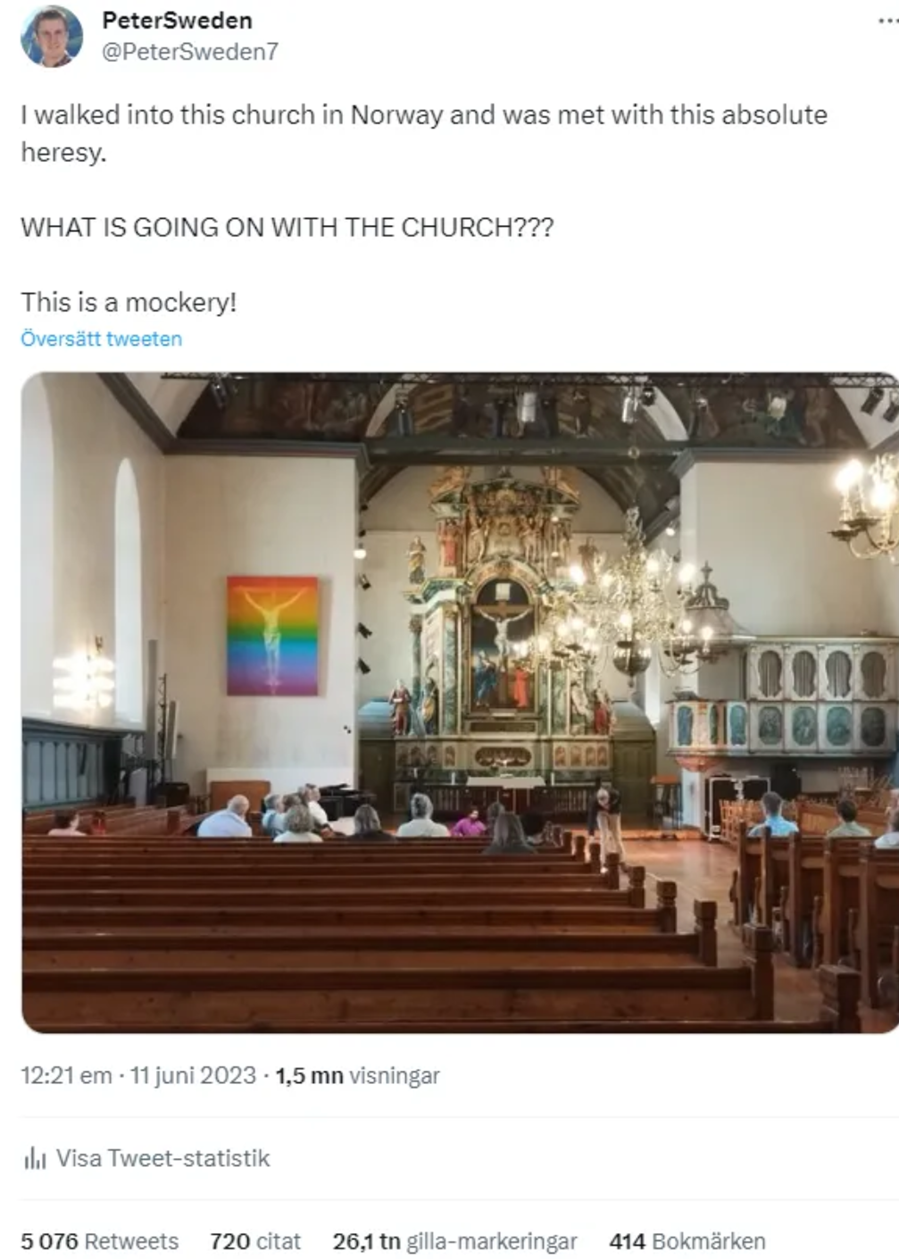
And there’s this: without God, the world looks to itself for a moral compass, hence Project ESG. Elites consider those under them to be lost sheep designers who need a global shepherd to direct them.
Without God, humans look to the world for drama to give meaning to their life. Many people rely on the media and social media to give meaning to their nihilistic existence. Hence, increasing paganism.
Without God, humans look to the world for identity and affirmation. Hence the vitriol and rage when gays, trannies, drag queens, and the like are not affirmed in every conversation. Project ESG makes sure that narcissism is affirmed with its DEI metrics.
Without God, Project ESG and the Great Reset look like paths forward for humanity when in reality they are paths toward the subjugation of humans under totalitarianism. The murderous history of totalitarianism will repeat itself if the elites have their way.
Project ESG judges believe they own the future and not just their future, your future. They believe they can fashion the future by refashioning you.
Like Project Runway, Project ESG is a game show with a few elitist judges determining whether you are worthy to be involved in their world. Contestants will learn whether Big banks find them Project ESG worthy of capital to survive.
“As you know in ESG, one day you’re in. And the next day, you’re out.”
*****
Elite judges? You’ll know them by their god-complex:
They believe they are entitled to special treatment or privileges.
They are excessively controlling.
They refuse to accept criticism.
They think they have all the answers.
They feel superior or invincible.
They have a superiority complex.
They Ignore the needs of others.
They are indifferent to how their actions affect others.
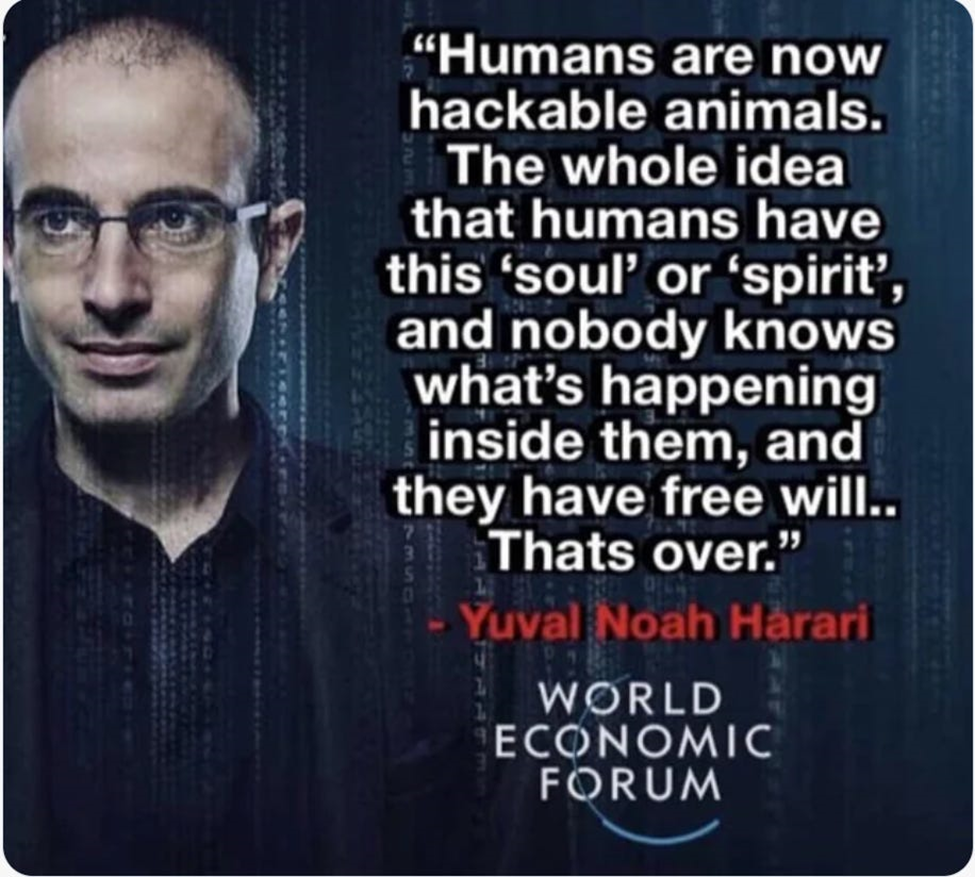
Here is the over-arching perspective of one haughty elite, an Israeli named Yuval Noah Harari:
“History began when humans invented gods, and will end when humans become gods.”
Joe Allen: The First Church Of Artificial Intelligence (rumble.com)
*****
2023-ESG-ReportvWeb-2.pdf (heartland.org)
The Many Threats of ESG (Guest: Jack McPherrin) – The Heartland Institute
*****
The Parable of Chesterton’s Fence « Meridian Magazine (latterdaysaintmag.com)
The great and wise G.K. Chesterton once wrote, (from Chesterton’s 1929 book, The Thing, in the chapter entitled, “The Drift from Domesticity)”:
“In the matter of reforming things, as distinct from deforming them, there is one plain and simple principle; a principle which will probably be called a paradox. There exists in such a case a certain institution or law; let us say, for the sake of simplicity, a fence or gate erected across a road. The more modern type of reformer goes gaily up to it and says, “I don’t see the use of this; let us clear it away.” To which the more intelligent type of reformer will do well to answer: “If you don’t see the use of it, I certainly won’t let you clear it away. Go away and think. Then, when you can come back and tell me that you do see the use of it, I may allow you to destroy it.”
*****
Pushback:
Major League Baseball panics, tells teams to kill Pride logos (wnd.com)
Major League Baseball Strikes All Pride Jerseys (washingtonstand.com)
Jack Posobiec: The Western Church Has Completely Surrendered The Public Square (rumble.com)
*****
Born in Chicago, I lived in the Chicago area for 69 years. Last year I moved to Indiana. I had enough of Illinois Democrats, high property taxes, insane COVID mandates, and “fat cat” Governor J.B. Pritzker.
For many years I bought the Sunday Chicago Tribune solely for the comics, the crossword and a column by John Kass.
“Until summer 2020, his opinion pieces regularly appeared on page 2 of the main news section of the Tribune, instead of on the opinion/editorial pages; this is the spot formerly occupied by Mike Royko.
. . . In June 2021, Kass took the buyout offer at the Chicago Tribune, after 38 years at the paper. In his final column, he announced his writing could continue to be found at johnkassnews.com. “Wikipedia
I read Kass’s columns because he was an objective journalist who spoke in no uncertain terms about the “Chicago way”. He wasn’t a Progressive mouthpiece like the rest of the Trib’s columnists.
(John Kass, also a lifetime Chicagoan who at one time studied film at Columbia, also recently moved to the “free state of Indiana”.)
Here’s a “Kasso” podcast about Brandon Johnson, the communist mayor of Chicago, and about Ukraine:
“On this episode, John’s younger brother Nicholas Kass, a retired American diplomat with over 30-years of experience -focused on Aegean/Eastern Mediterranean issues, takes a deep look at how we got to a war of attrition in Ukraine and whether or not this instability puts the future of NATO at risk.”
*****

Informed Dissent:
“While scientists justify such research as necessary for developing vaccines, President Barack Obama banned federal funding for gain-of-function research of concern in 2014, because experts had come to the consensus that it was too dangerous. However, the National Institute of Health and NIAID headed by Francis Collins and Fauci, and a major U.S. government grantee, EcoHealth Alliance, deemed their work on SARS-like viruses as not falling under the gain-of-function research of concern definitions and funded this project in China and Southeast Asia. (Emphasis mine.)
“. . . the scope of One Health, according to a One Health Commission document, also includes communications, economics, civil society, global trade, commerce and security, public policy and regulation, research, noncommunicable diseases and much more.
Under the new treaty, the WHO will have unilateral power to make decisions about all of these areas, and its dictates will supersede and overrule any and all local, state and federal laws. In short, if the pandemic treaty is enacted, the WHO will not merely have the authority to dictate how countries prepare for and respond to pandemic threats: It will have the authority to dictate every aspect of our lives. (Emphasis mine.)
WHO Launches Digital Health Partnership With Europe | USSA News | The Tea Party’s Front Page.
*****
This is how totalitarians deal with you:
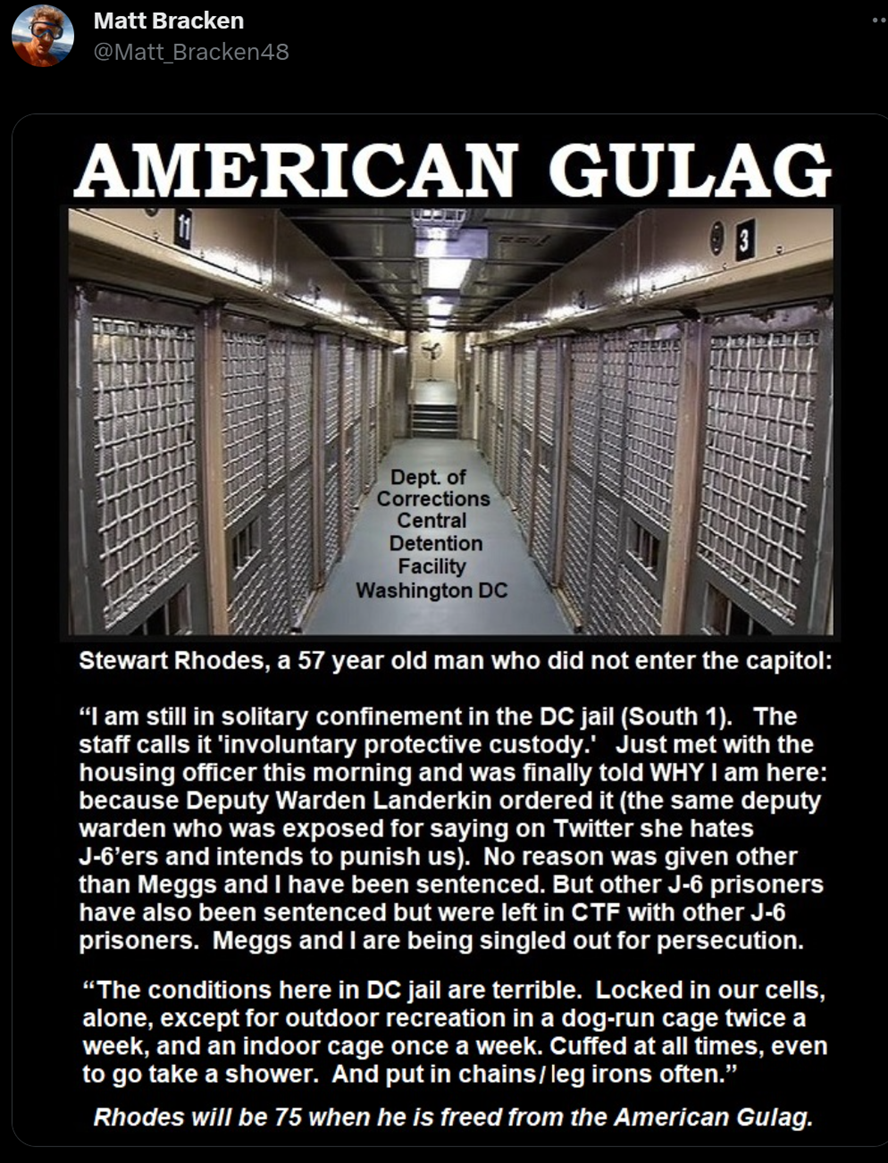

Tucker:
ESG Dystopia: Why Corporations Are Doubling Down On Woke Even As They Lose Billions – Discern Report


Someone posted this on social media:
We are the unhealthiest population of all time. Here’s why.
1. Industrial seed oils replacing real animal and fruit fats (tallow, suet, lard, butter, ghee, olive, coconut, avocado) as the primary fat used in 99.9% of store-bought and restaurant food products.
2. Vaccines convincing the public that herd immunity was conferred by mass vaccination instead of natural immunity in the backdrop of proliferating global disease spurred on by the industrialization and travel (globalization) of the 21st century.
3. Environmental and food estrogens (xenoestrogens, phytoestrogens) entering the human population through water (birth control), clothing (polyester, etc), and food derivatives (unfermented soybean products like oils, fillers, and mylks).
4. Social engineering promulgated by governments and the ruling class in order to condition the world to globohomo: a flat, homogeneous, global serfdom heavily reliant on big government and fully prepared for a massively consolidated western corporatist government.


😷 Lockdown 2.0 Is Coming Soon: 😵💫 Are We Already Conditioned for Another One? – YouTube
 Kingdom Venturers