“. . . the terror of the night
or the arrow that flies by day
or the pestilence that stalks in darkness
or the destruction that wastes at noonday.” Psalm 91
Fires, floods and extreme weather will imperil a third of all life on land in the next 60 years.
Nobel Physicist Predicts END DATE For Modern Civilization: And it’s quite soon…
The New York Times’s Resident Catastrophist Delivers Another Subscription to the End of the World
You wake up in a news cycle that never sleeps. With a cup of coffee, you read what ‘doomcasters’ are saying about end-of-life scenarios appearing on the horizon. Now you are fully awake and wondering what to do with these high alert headlines? Do you let existential crisis into your life?
You sip your coffee and remember that not long ago the world was subjected to pandemic hysteria. Coronavirus, the “global crisis of unprecedented reach and proportion,” started making headlines at the beginning of 2020.
You recall the WHO declaring the coronavirus a “public health emergency of international concern.” And the headlines declaring surges in COVID-19 cases attributed to the Omicron variant, a “tripledemic” – COVID combined with flu and RSV, and of overwhelmed hospitals and healthcare systems and dancing nurses.
How could you forget that Biden imposed OSHA vaccination and testing emergency standards on your business or the reality-warping restrictive policies involving mandated lockdowns, masking, social distancing, fines, and vaccines, or the CDC predicting people will die?
You pour yourself another cup of coffee and look out the kitchen window. You see the couple next store – Vivian and Zoe – walking their dog Baxter. The other day, when you took the garbage can to the curb, the apoplectic twosome accosted you with “Democracy is threatened by the likes of you extremists, fascists, racists, homophobe Christian nationalists!” and “Trump is Hitler!” They saw you going to church last Sunday.
You drink your coffee troubled that Viv and Zoe had been beaten down by another media existential crisis campaign, akin to the rollout of the COVID-19 marketing campaign that told us to worry about it, and how to worry about it.
Under the spell of the “Democracy is threatened” campaign, Viv and Zoe were in a state of emotional panic. And that had them beat down on the closest person who didn’t share their views or the views of the commercial-sponsored media. The media’s inordinate influence has you very concerned about the collective fear and confusion its campaigns were causing to psyches.
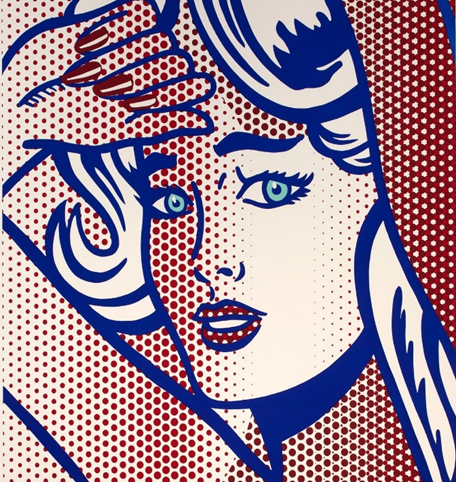
The beat down goes on . . . in our heads.
~~~
How shall we then live in the context of existential dread?
Day after day imagination is battered with dire predictions– the end of this and that unless we do this and that. The steady beat of amplified headlines overwhelms one’s patience, strength, and soul.
Climate change, pandemics, wars, “Democracy!” AI Could Make Humans Irrelevant!
How do we respond to headlines telling us that we are done for? Should we let fear and helplessness dominate our lives? Can we live in terms of “accepting disharmony from the outset and defying it”? This last way of going forward is the directive C.S. Lewis prescribes in his essay “On Living in an Atomic Age.”
Published in post-war 1948 and at the beginning of the atomic age, the essay provides a reality-check perspective and presents a scenario of how to live in life-ending times.
The following is an excerpt from the opening of Lewis’ short essay. During COVID the excerpt was passed around on the internet, with “atomic” replaced with “coronavirus.” Certainly, the essay can be applied to any dire life-threatening circumstances.
In one way we think a great deal too much of the atomic bomb. “How are we to live in an atomic age?” I am tempted to reply: “Why, as you would have lived in the sixteenth century when the plague visited London almost every year, or as you would have lived in a Viking age when raiders from Scandinavia might land and cut your throat any night; or indeed, as you are already living in an age of cancer, an age of syphilis, an age of paralysis, an age of air raids, an age of railway accidents, an age of motor accidents.”
In other words, do not let us begin by exaggerating the novelty of our situation. Believe me, dear sir or madam, you and all whom you love were already sentenced to death before the atomic bomb was invented: and quite a high percentage of us were going to die in unpleasant ways. We had, indeed, one very great advantage over our ancestors — anesthetics; but we have that still. It is perfectly ridiculous to go about whimpering and drawing long faces because the scientists have added one more chance of painful and premature death to a world which already bristled with such chances and in which death itself was not a chance at all, but a certainty.
This is the first point to be made: and the first action to be taken is to pull ourselves together. If we are all going to be destroyed by an atomic bomb, let that bomb when it comes find us doing sensible and human things praying, working, teaching, reading, listening to music, bathing the children, playing tennis, chatting to our friends over a pint and a game of darts—not huddled together like frightened sheep and thinking about bombs. They may break our bodies (a microbe can do that) but they need not dominate our minds.
The full essay, in the document below, contains questions and positions Lewis maintains, such as
Are we “accepting disharmony from the outset and defying it?”
Do we “hold up our own human standards against the idiocy of the universe?”
Are we the product of blind physical forces and therefore unable to provide answers to questions of a fatalist existence?
“But suppose we really are spirits? Suppose we are not the offspring of Nature…?”
“We must go back to a much earlier view.”
“We must simply accept it that we are spirits, free and rational beings, at present inhabiting an irrational universe, and must draw the conclusion that we are not derived from it.”
“If there is no straight line elsewhere, how did we discover that Nature’s line is crooked?”
“Nothing is more likely to destroy a species or a nation than a determination to survive at all costs.”
https://www.matthewaglaser.com/living-in-an-atomic-age
“On Living in an Atomic Age” (first published 1948) by C. S. Lewis (1898–1963) From: Present Concerns: Essays by C.S. Lewis (edited by Walter Hooper; New York: Harcourt Brace Jovanovich, 1986), pages 73–80
Born a few years after the above essay was published, I became well aware of ‘doomcasting’ headlines. I recalled some of the headlines in my January 2025 post Surface Readings.
The post began with the words of poet W H Auden – “Now is the age of anxiety” and my own take on things: “Impending doom has been in the news during my entire lifetime.” I wrote about the headlines and pronouncements of those anxious times which included the book The Late great Planet Earth based on the modern and heretical notion of dispensationalism.
~~~
Imagination Reset
Taking in the spirit of the times, imaginations are exposed to the negation of life, nihilism, and dire predictions often made for political ends that use fear to move power into the hands of the few.
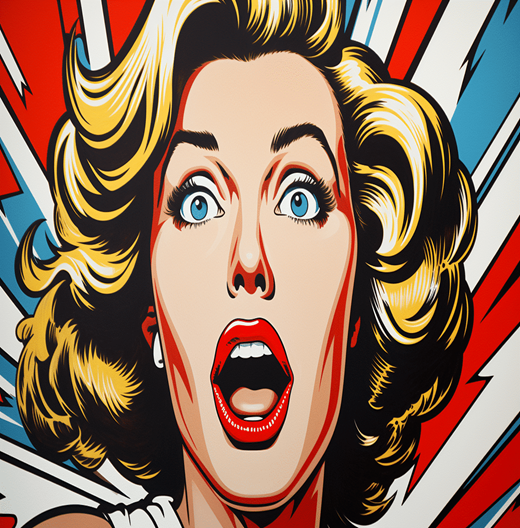
Taking in the digital tabloid times is the “WHAAM!” of a Roy Lichtenstein Ben-Day dots painting. Imagination is amped up and ready to pop with a Pow!
What happens to our imaginations when we are constantly confronted with crisis? And how do we live with dire predictions?
With the 24/7/365 news cycle, it’s little wonder that “News Avoidance” is becoming a common way to deal with the constant specter of troubling things, as Thaddeus G. McCotter writes in I Didn’t Read the News Today, Oh Boy: Embracing the ‘News Avoidance’ Pandemic
“If you live today, you breath in nihilism … it’s the gas you breathe. If I hadn’t had the Church to fight it with or to tell me the necessity of fighting it, I would be the stinkingest logical positivist you ever saw right now.” ― Flannery O’Connor
What we shouldn’t avoid are resources such as poetry, art, classical literature and music to help us cope with and see beyond the terrors of the modern age. We need the signal of those who came before and dealt with all kinds of things and not the clamoring noise of influencers.
Poet Wallace Stevens, in “The Noble Rider and the Sound of Words” writes that poetry, as it interacts with reality and the imagination, can shape our perspective and provide meaning and comfort in a world that often feels overwhelming and harsh.
Wallace emphasizes the role of imagination in countering the beat down of life. If you are a Christian, you already know that the poetry of the Psalms does just that, e.g., Psalm 91.
In the video below, Dr. Jason Baxter, author of The Medieval Mind of C.S. Lewis, discusses his book, Why Literature Still Matters.
Why Literature Still Matters: An Interview with Dr. Jason Baxter | Classical Home Education
~~~
If you need a quick antidote to climate hysteria, Itxu Díaz provides his take on the news of impending doom: Climate Change Scientists Set a Date for the Arrival of Hell on Earth: the Year 2085.
~~~
Naomi Wolf with Outspoken: “I’m here tonight to talk about a huge news story that broke in the last couple of days. It could be the thread that unravels the whole COVID virus/vaccine perpetrator issue.
“A criminal syndicate, essentially.
“Even just this initial gesture is so transformational. It breaks the spell of, “No one can be held accountable, no one can be investigated from the untouchable third rail COVID vaccine rollout, COVID virus rollout.””
“The Shocking Story of NIH Secretly Funding COVID”
~~~
And the Beat Down Goes On
~~~
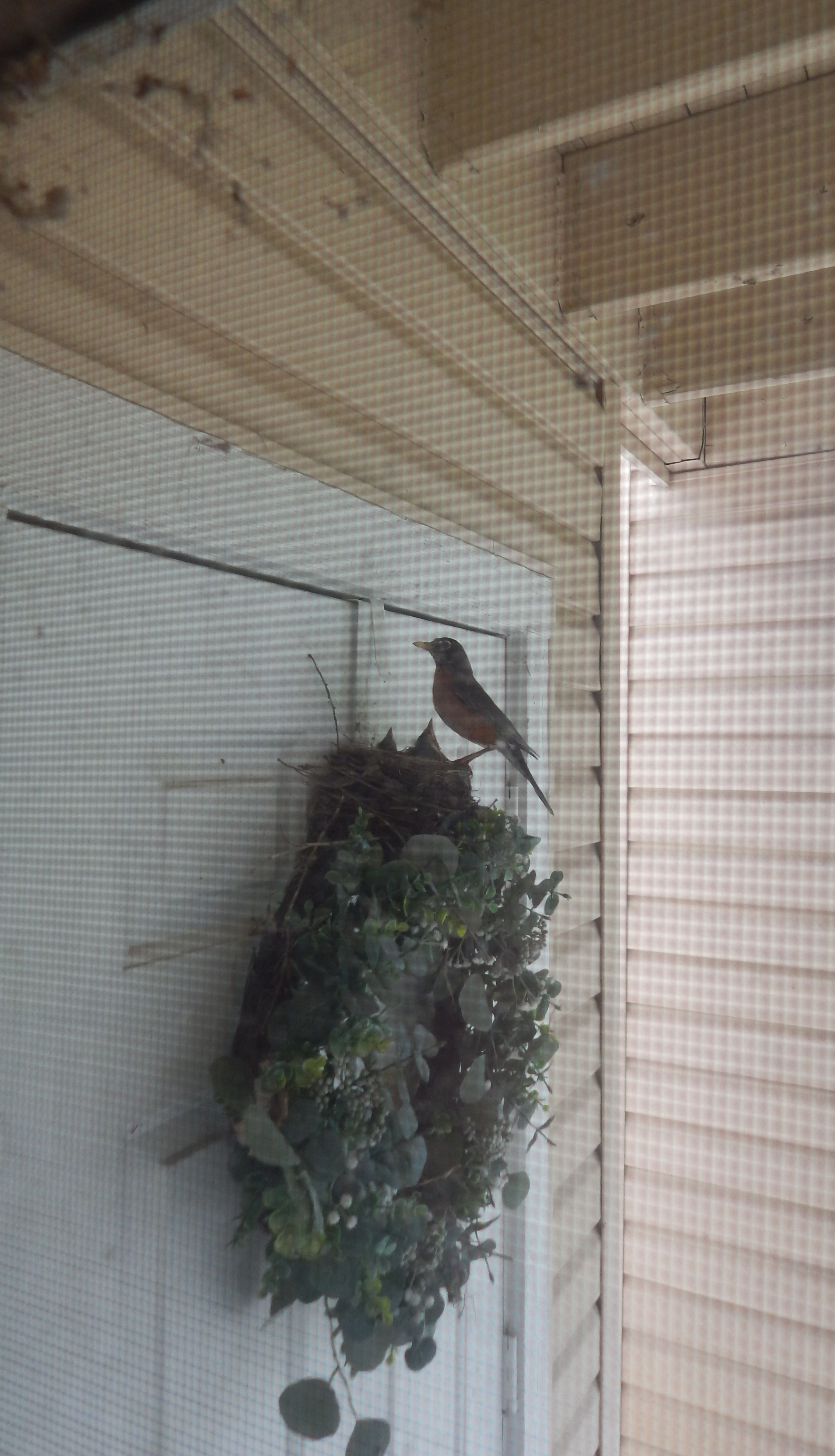
Wreathing (Matthew 6:34)
On my shed door, atop its plastic wreath,
a robin fashioned a nest, found twigs the binding.
then, behold,
above the manufactured certainty,
within the steadfastly twig-tucked wreathing,
her brood burst burst burst forth.
J.A. Johnson, 2026
 Kingdom Venturers